Its ability to relieve, increase mood, and energize is what has attracted the interest of wellness enthusiasts in kratom. However, as with a lot of botanicals, frequent use may result in a phenomenon known as kratom tolerance: the point where your regular dose no longer has the effects you may be used to.
Being a kratom beginner or an experienced user, know about kratom tolerance and ways to take full advantage of this half-wild natural extract and decrease its dangerous side effects.
In this blog, we’ll discuss what kratom tolerance is, what causes it, how to prevent it effectively, why it is advisable to take breaks, and introduce a handy chart of kratom tolerance that will help you decide on what to do.
What Is Kratom Tolerance?
Kratom Tolerance is the state in which your body gets used to the effects of active alkaloids of kratom (mainly mitragynine and 7-hydroxymitragynine) and needs higher doses of kratom to achieve the same effect.
The receptors in the brain also adjust to the presence of these compounds, and with time, the same amount of kratom will not be very effective. It is the same case as with caffeine, some medications, or other botanicals.
Key Signs of Kratom Tolerance
You need to increase your dose to feel the same effects.
- The usual effects, such as relief, mood boost, or energy, feel diminished.
- You find yourself using kratom more frequently than before.
- Cravings or emotional changes (irritability, restlessness) appear when you reduce or skip a dose.
Tolerance is not inherently dangerous, but if left unmanaged, it can lead to dependency, reduced benefits, and unwanted side effects.
Why Does Kratom Tolerance Develop?
Several factors contribute to the development of kratom tolerance:
- Frequent Use: Daily or multiple daily use accelerates tolerance.
- High Dosage: Consistently taking large amounts increases the risk.
- Using the Same Strain: Relying on a single kratom strain leads to stagnant strain syndrome, and the body adapts to its specific alkaloid profile.
- Individual Body Chemistry: Metabolism, age, weight, and genetics affect how quickly tolerance builds.
- Duration of Use: The longer you use kratom, the more likely tolerance will develop.
The Science: Down-Regulation and Adaptation
Kratom tolerance is a process that is known as down-regulation. This is because through repetitive use, the brain will decrease the production or number of receptors stimulated by the alkaloids in kratom to make the equal dose not as effective.
This is a natural protective measure, but this implies that it will take you much more kratom to get the same results somewhere down the line.
Kratom Tolerance Chart: Understanding the Stages
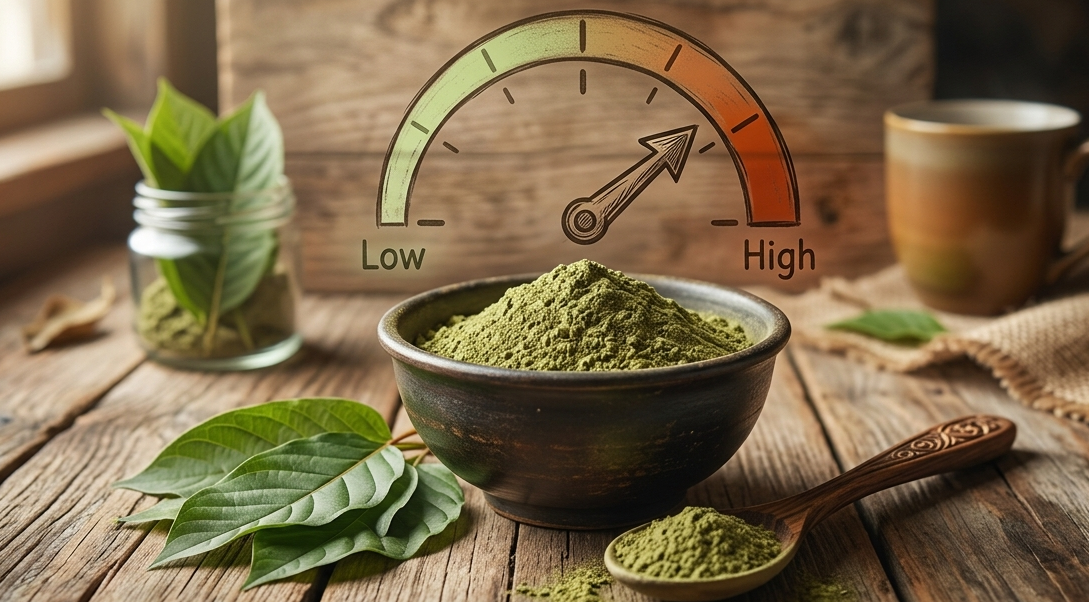
Tolerance doesn’t develop overnight. Here’s a simplified chart to illustrate how kratom tolerance can progress based on frequency and dosage:
| Usage Pattern | Time to Notice Tolerance | Typical Signs | Risk Level |
| Occasional (1-2x/week) | Months or never | Minimal to none | Low |
| Moderate (3-4x/week) | 1-2 months | Slight decrease in effects | Moderate |
| Daily, Low Dose | 2-4 weeks | Noticeable decrease in effects | Moderate-High |
| Daily, High Dose | 1-2 weeks | Rapid loss of effect, cravings | High |
| Multiple times/day | Days to 1 week | Strong tolerance, withdrawal signs | Very High |
How to Avoid Building Up Kratom Tolerance
Preventing kratom tolerance is easier than reversing it. Here are proven strategies:
1. Buy From GMP-Certified Vendors
High-quality Kratom works at lower servings, usually 1–3 grams. If you’re taking 7g+ and still not feeling anything, it might not be your tolerance; it might be your product.
2. Smaller Servings = Better Effects
Too much Kratom can blunt the benefits. A large serving can feel sedating or “foggy.” If that sounds familiar, try scaling back. Smaller servings are more stimulating and crisp.
3. Clean Up Your Diet
Processed foods, sugar, and trans fats can mess with your metabolism and your Kratom effects. A poor diet can mimic tolerance. Try eating clean for a few days and see how your Kratom responds.
4. Get Active + Use Stimulating Strains
Exercise increases serotonin and enhances Kratom’s natural benefits. A fast strain can be the perfect pre-gym companion.
5. Try a Slow Taper
Gradually lower your serving size by small amounts. Your body will adapt with less discomfort than a cold-turkey break.
6. Or Try a Fast Taper
If you prefer a quicker route, reduce your servings more aggressively, but prepare for more discomfort.
7. Spacing Your Servings
Keep your serving size the same, but increase the time between doses. If you usually take Kratom every 3 hours, stretch it to 4, then 5. This reduces your total daily intake without sacrificing the individual serving.
8. Use a New or Rare Strain
Switch things up with a strain you’ve never tried, or take a break using Stem & Vein. After several days, return to a full rotation of varied strains. This resets your receptors.
9. Skip Bedtime Kratom
Those 8 hours of sleep are also 8 hours of natural “washout.” If you don’t need Kratom to sleep, skip it or try relaxing alternatives like CBD or herbal teas.
10. Take a Full Kratom Break
Take a full break from Kratom for a few days to a couple of weeks. If needed, use Kava or Stem & Vein to soften the break. When you return, recommit to your Sweet Spot and Rotation.
Kratom Breaks: How and Why to Take Them
A kratom break is a planned pause in kratom use, typically lasting from a few days up to a week or more. The goal is to allow your body’s receptors to recover, restoring kratom’s effectiveness and reducing the risk of dependence.
How to Take a Kratom Break
- Duration: Most users find 3-7 days effective, but even a single day can help.
- What to Expect: You may feel mild discomfort, restlessness, or cravings, especially if you’ve been using kratom daily. These symptoms are usually short-lived.
Tips for Success:
- Stay hydrated and maintain healthy routines.
- Use natural alternatives for relief (herbal teas, exercise, meditation).
- Distract yourself with hobbies or social activities.
Rapid Taper Method
If a full break feels daunting, try reducing your dose by half for several days before stopping completely. This “rapid taper” can ease discomfort and make the break more manageable.
Key Benefits of Managing Kratom Tolerance
- Sustained Effectiveness: Kratom continues to provide relief, mood support, or energy at lower doses.
- Lower Risk of Dependence: Reduces the likelihood of developing physical or psychological dependence.
- Cost Savings: Smaller doses mean your supply lasts longer.
- Better Overall Well-being: Avoids the cycle of escalating doses and side effects.
Final Thoughts
Learning and dealing with kratom tolerance is vital to every person desiring to take the pleasures of kratom safely and cleanly. A tolerance builds up, and when this happens, your body gets used to the effect of kratom, and as a result, you might, on most occasions, increase your dosages, and you start getting diminishing returns.
Through strain rotation, frequent kratom breaks, and low effective dosage, you will be able to prevent or at least curb tolerance, and your use of kratom will work over the long term. You need to remember that when you realize that the dose which you regularly take does not seem to have the same effect, you should not immediately increase it; you should rather rest or change your schedule.
Kratom is not only a great drug with some positive effects, but also, when used responsibly, can minimize the danger of dependence and unpleasant side effects. All in all, when you are conscious of and active in kratom tolerance, you can make the best out of this botanical without neglecting your health.
More Resources
Working Out With Kratom: Is It Worth It?
How To Improve Mitochondrial Health?
Mastering Kratom Toss and Wash